The Artist's Perspective | Technical & Allegorical Context
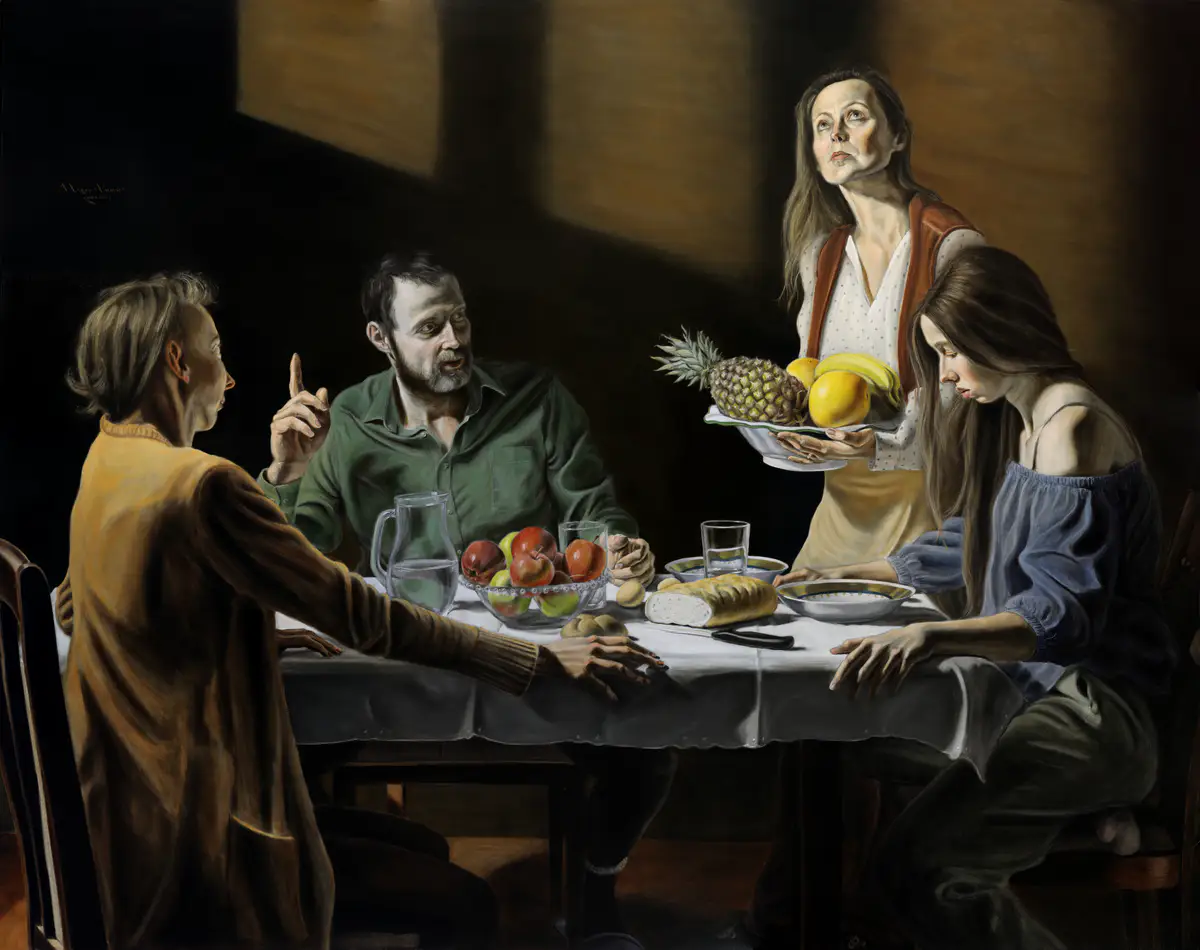
Judge this work only by the standard you dare to apply to your own soul. Anything less is merely observation; anything more is a lie. In this 200x160cm canvas, I explicitly sought a dialogue with Michelangelo Merisi da Caravaggio. The composition follows the classic 'Emmaus' triangle, but the divine revelation is replaced by the raw, domestic reality of my own family. Technically, it is a balanced study between material and ethereal painting; the still life on the white tablecloth—the bread, the glass pitcher, the eggs—is rendered with sharp, physical presence, while the figures emerge from the shadows through delicate, almost translucent glazes.
The side-lighting, mimicking a high window, creates a cinematic tension. My raised finger is not just a gesture to my daughters; it is a compositional anchor that directs the viewer's eye through the narrative of the table. By dressing my family in contemporary clothing, I wanted to prove that the dramatic 'Chiaroscuro' of the 17th century is not a dead style, but a living language capable of dignifying the most ordinary moments of our modern lives.
The Family Table (Sacred vs. Secular):
By replacing Caravaggio’s disciples with my wife and two daughters, I transform a biblical revelation into a domestic sacrament. The ordinary family meal is elevated to a monumental, timeless event.
The Mother as Giver (The Modern Cornucopia): Standing by my side, my wife holds a bowl of exotic fruits—pineapple, orange, and banana. This act transforms her into a modern Ceres, a symbol of abundance and the nurturing force that sustains the family.
The Bread and Eggs (Life and Potential):
The sharply rendered still life serves as a bridge between the physical and the ethereal. The eggs, ancient symbols of birth and fragile potential, anchor the divine light to the raw reality of the table.
The Contrast of Fruits (Humble vs. Exotic): While the bread and apples on the table represent simplicity and tradition, the vibrant tropical fruits in her hands introduce a dynamic burst of color. This contrast reflects the prosperity of the modern world brought into the timeless setting of the home.
The Glass Pitcher & Water (Purity of Truth): The transparency of the glass pitcher and the water within is a classic Baroque study of light. It symbolizes clarity and honesty in the domestic sphere—a technical challenge of refractive depth that mirrors the painter’s search for truth
.
The Raised Finger (The Narrative Anchor):
My own gesture acts as a compositional compass. In art history, it often points toward Truth; here, it directs the viewer’s eye through the intimate dialogue between a father and his children.
Contemporary Clothing (The Living Language):
Dressing my family in modern attire proves that 17th-century Chiaroscuro is not a dead museum style, but a vital language capable of dignifying the most ordinary moments of modern life.
The High Window Light (Cinematic Tenebrism):
The dramatic side-lighting creates a "hallowed" atmosphere, turning a private kitchen scene into a grand, silent play where light itself becomes the main protagonist.